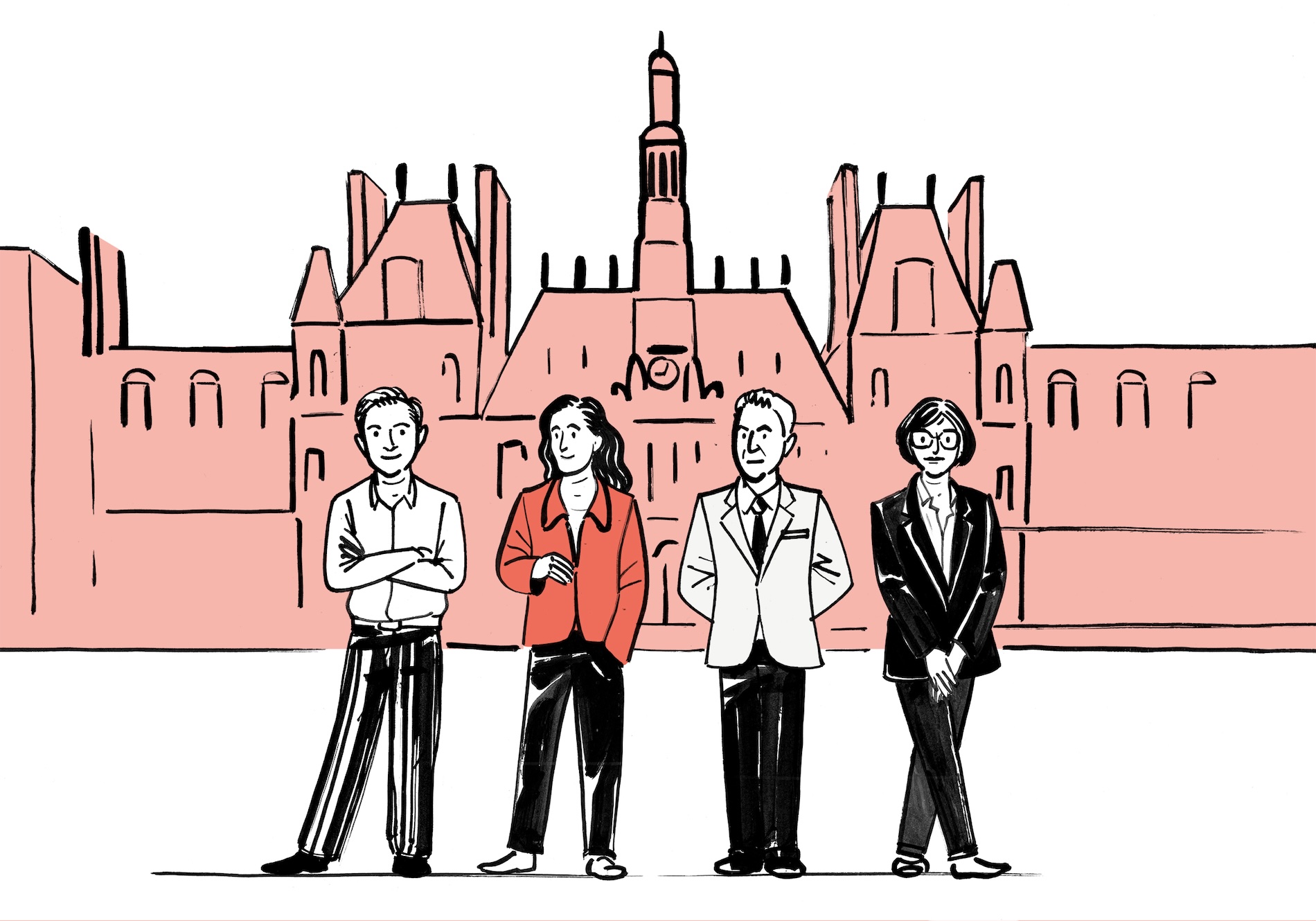
The Shifting Tides of Parisian Politics: Beyond the Hidalgo Era
Paris stands at the precipice of a significant political transition. As the 2026 municipal elections draw closer, the city is preparing to elect a new mayor, marking the end of an era defined by Anne Hidalgo's leadership. After two consecutive terms, Hidalgo announced she would not seek re-election, leaving a void that has sparked intense competition and a fundamental reshaping of the political landscape. Understanding the key candidates and their emerging `municipales paris programme` is crucial for anyone keen on the future direction of the City of Light.
Hidalgo's tenure has been a tapestry of contrasts. Globally, she garnered acclaim for ambitious environmental initiatives, transforming Paris into a greener, more bike-friendly metropolis. Her efforts resulted in an additional 500km of cycle lanes, contributing to a remarkable 44% reduction in traffic-related air pollution in certain areas. Furthermore, her administration proudly oversaw the return of the Seine to a near-swimmable condition, a feat not seen in a century. However, domestically, her legacy is viewed with more skepticism. Many Parisians expressed frustration with what they perceived as a top-down governance style, and her national profile suffered after a dismal presidential bid in 2022, securing just 1.75% of the vote – the worst in the Parti Socialiste's history.
This mixed legacy means that the 2026 elections won't be a simple continuation of the status quo. Instead, they promise a vibrant and potentially unpredictable contest, heavily influenced by personalities, intricate political alliances, and the pervasive impact of social media. With France grappling with broader democratic challenges and the rising tide of the far-right, the outcome in Paris will resonate far beyond the Hôtel de Ville, potentially influencing the national political narrative leading up to the 2027 presidential elections.
Emmanuel Grégoire: The Union of the Left and Ecologists' Standard-Bearer
At the forefront of the progressive charge is
Emmanuel Grégoire, the Parti Socialiste (PS) nominee and a former first deputy to Anne Hidalgo. Grégoire's candidacy represents a significant strategic move on the left, as he spearheads a historic coalition that includes Les Écologistes (France's Green Party) and the French Communist Party (PCF). This broad alliance positions him as the leading candidate for a unified left-ecologist front, aiming to consolidate progressive votes and build on existing green momentum.
Grégoire's emergence as the PS nominee was not without its internal drama. He successfully navigated the party primaries, overcoming Anne Hidalgo's preferred successor, Rémi Féraud. This internal contest highlights a desire within the PS to move beyond the immediate shadows of Hidalgo's later terms, even if it means some friction with the outgoing mayor herself, who reportedly blames Grégoire for a lack of support.
The core of Grégoire's `municipales paris programme` is expected to reflect the priorities of this diverse coalition. We can anticipate a strong emphasis on accelerating Paris's ecological transition, potentially expanding on initiatives like car-free zones, promoting sustainable urban development, and investing further in green infrastructure. Social justice, affordable housing, and strengthening public services are also likely to feature prominently, addressing concerns about inequality and the rising cost of living in the capital. His experience as first deputy means he is intimately familiar with the city's complex administrative machinery, offering a promise of continuity mixed with fresh perspectives. For a deeper dive into his specific proposals, you can read more about
Emmanuel Grégoire's Programme for Paris 2026.
Beyond the Main Contenders: A Glimpse at Other Key Players
While Emmanuel Grégoire commands significant attention, the Parisian political landscape is far from a one-person race. Other candidates and parties will undoubtedly vie for influence, shaping the overall discourse and offering alternative visions for the city.
To Grégoire's left,
Sophia Chikirou is expected to stand for Jean-Luc Mélenchon’s La France Insoumise (LFI). LFI represents a more radical left-wing perspective, often advocating for fundamental societal changes. While LFI has previously allied with the PS, notably in the 2024 New Popular Front alliance formed to counter the far-right, Grégoire has indicated a path to the Hôtel de Ville without their direct support. Chikirou's `municipales paris programme` would likely focus on issues such as enhanced social welfare programs, direct democratic participation, challenging corporate power, and more aggressive climate policies from an anti-capitalist stance. Her presence will appeal to a segment of the electorate seeking a more profound break from traditional governance.
Beyond the left, Paris remains a diverse political battleground. While the provided context focuses primarily on the left-wing contenders, it's inevitable that candidates from the political center, right, and even the surging far-right will enter the fray. A center-right candidate, for example, might emphasize fiscal responsibility, public safety, and supporting businesses, perhaps critiquing the current administration's urban planning decisions. The far-right, while historically less dominant in Paris compared to national trends, will likely seek to capitalize on any discontent regarding immigration, security, or national identity, though their `municipales paris programme` for a major metropolitan area would also need to address core urban issues. The interplay of these diverse platforms and the formation of potential second-round alliances will be critical in determining the election's outcome. Understanding these complex political dynamics is key to anticipating the election results; explore more on
Paris 2026: Decoding the Left's New Alliances Post-Hidalgo.
Decoding the Municipal Paris Programme: Key Themes to Watch
As candidates finalize their platforms, several overarching themes are certain to dominate the `municipales paris programme` discussions, reflecting the unique challenges and aspirations of this global city. Voters should pay close attention to how each candidate plans to address these crucial areas:
- Environmental Stewardship and Urban Planning: Building on Paris's reputation as a green city, candidates will propose strategies for air quality improvement, expanding green spaces, sustainable transport (beyond cycling), and climate change adaptation. Look for innovative ideas on waste management, energy transition, and making the city more resilient to extreme weather. How will they balance ecological imperatives with the needs of businesses and residents?
- Housing Affordability and Social Equity: Paris faces a chronic housing crisis. Programmes will outline solutions for increasing affordable housing, regulating short-term rentals, and tackling homelessness. Furthermore, expect proposals aimed at reducing inequalities across the city's diverse arrondissements, ensuring access to quality public services, education, and cultural opportunities for all residents.
- Mobility and Public Spaces: Beyond cycle lanes, candidates will address the future of public transport, pedestrian zones, and the role of cars in the city. How will they manage traffic congestion, improve public transit reliability, and create more accessible and enjoyable public spaces for interaction and relaxation?
- Safety and Quality of Life: Security remains a perennial concern. Candidates will present plans for urban safety, combating petty crime, and fostering a sense of community well-being. This might involve increased police presence, community policing initiatives, or social programs designed to prevent delinquency.
- Economic Vibrancy and Innovation: As a global economic hub, Paris needs a vision for supporting local businesses, attracting international investment, and fostering innovation. Programmes will detail strategies for tourism management, supporting start-ups, and ensuring that Paris remains a competitive and attractive place to work and live.
- Citizen Participation and Local Democracy: Following criticisms of top-down governance, many candidates may emphasize increased citizen engagement. Ideas like participatory budgeting – allowing residents a direct say in local spending – or enhanced neighborhood councils could feature prominently, empowering Parisians to actively shape their city.
Practical Tip for Voters: Don't just skim headlines. As the election cycle progresses, delve into the detailed manifestos of each candidate. Compare their proposed solutions for issues that matter most to you, considering the feasibility and potential impact of their `municipales paris programme` on your daily life.
The 2026 Paris municipal elections are more than just a local contest; they are a litmus test for the future of urban governance in a rapidly changing world. With the departure of a long-standing incumbent and the formation of new political alliances, Paris is poised for a transformative moment. Understanding the candidates and their respective `municipales paris programme` is not just about choosing a mayor; it's about casting a vote for the very soul of this iconic city.